
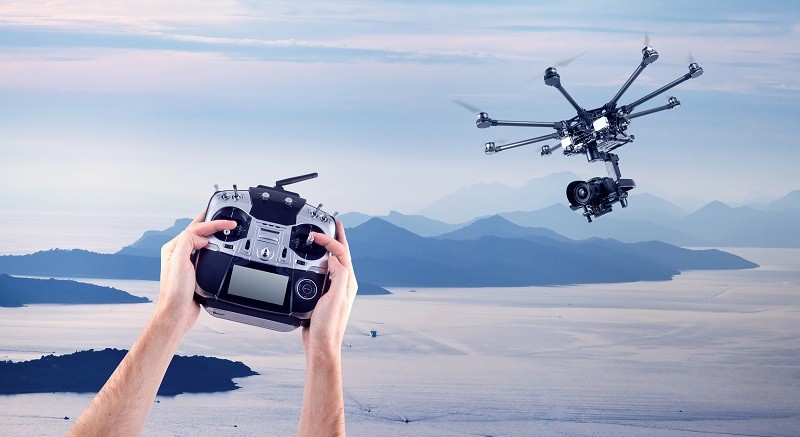
Drones provide photographers and videographers with aerial capabilities that expand creative possibilities. Once reserved for major studios, drones now offer affordable access to overhead angles even for amateur content creators.
Enhancing Production Value
Elevated viewpoints visually engage audiences in fresh ways. Drone-captured aerials can establish locations, showcase sweeping scenes, and provide unique points of view. This added dimension boosts production quality for marketing materials, events, real estate listings, tourism promotions, and other media applications.
While helicopter and plane footage once cost thousands, hobbyist drones now facilitate dynamic aerial capture. Most consumer quadcopter models shoot stabilized 4K video and 12MP stills or better while hovering reliably. Such features bring Hollywood production value to hometown projects on limited budgets.
Accessing Hard-to-Reach Places
Drones also enable easy access to tricky shooting spots like mountains, skylines, accident sites, construction zones or private property visible only from above. Rather than scale structures or secure airspace clearance, operators stay planted while piloting to optimal vantage points.
Faster setup saves time on shoots compared to traditional equipment maneuvers. This allows more location flexibility to capitalize on limited lighting/weather windows. Drones even traverse dark, cramped, hazardous interiors dangerous for human entry. The sky’s the limit for unusual angles.
Reinforcing Safety Protocols
Despite drones’ benefits, using them safely and legally remains paramount, especially around people, vehicles, or private property. Novice users risk injuries, crashes, fines, or lawsuits without proper protocols. Key steps include:
- Completing a drone training course provided by platforms like ProTrain, to learn flight control, navigation, and camera operation.
- Registering devices over 0.55 lbs. with the FAA.
- Checking municipal laws on usage limitations.
- Implementing pre-flight safety checks.
- Arranging insurance coverage.
- Using spotters when flying.
- Respecting surroundings to avoid disturbing others.
Following simple procedures, leveraging apps to identify restrictions, and putting safety first allow positive flying experiences while capturing compelling content.
Capturing Dynamic Shots
Drones’ ability to hover steadily, swoop smoothly, orbit subjects, reveal hidden perspectives, and maneuver into positions impossible for traditional equipment allows creative compositions undiscoverable through other means.
Astute photographers artfully apply these capabilities to enhance projects. Complex stunts like revealing real estate home details while continuously pulling away seamlessly intrigue viewers. Live event circling immerses audiences while spotlighting individual participants. Spinning rapidly around structures conveys grandeur through warping effects.
Post-processing further builds visual impact. Stitching drone photos into engaging panoramas keeps attention focused while revealing sweeping scale. Sharp 8K video down sampled to 4K boosts clarity and stabilization for outstanding corporate promotions. Synchronizing drone movements to audio/lighting effects adds pop.
Augmenting Inspections
Drones also provide immense utility for safety and maintenance inspections that are too costly, difficult, or dangerous for manual examinations. Experts pilot unmanned craft to scrutinize immense cell towers, volatile chemical facilities, crumbling architectural facades, remote construction sites, utilities infrastructure, accident scenes, and more.
High-resolution imaging details minute risks like cracked turbines, corroded tank seals, faulty circuitry, erosion under bridges, storm debris dangers, or wildfire hotspots for assessing intervention needs. Onboard sensors even detect heat loss, chemical emissions, moisture infiltration, or structural instability. Drones thus grant inspectors access that protects human safety.
Looking Ahead
As technology progresses, drones promise to further enhance media use cases through extended battery life for longer flights, improved safety systems to avoid collisions, reduced noise output for more discrete observation, stronger motors to withstand adverse weather, and augmented on-camera capabilities to collect diverse data types.
Advanced pilots also continue pushing creative boundaries for the benefit of public communications. More cities may allow expanded drone zones as the general public becomes better educated on ethical use standards.
Conclusion
Drones provide photographers, videographers, inspectors, and other specialists with previously impossible vantage points to enrich projects visually, uncover insights, and inspire audiences in new ways.

